Showing posts with label YA. Show all posts

Monday, 2 March 2015

The Selection

The blurb: In a world of glittering gowns and priceless jewels THE SELECTION is the chance of a lifetime to compete for the gorgeous Prince Maxon's heart.  But for America Singer it means turning her back on her secret love and leaving home for a price she doesn't want.

Then America meets Maxon and all her plans start to crumble.  Can the life she's always dreamed of compare to a future she never imagined?

I've had my eye on Kiera Cass's The Selection for a while, but it never seems to be on the shelf at the library, and I've never wanted to read it that much to go through the effort of ordering it in.  So, when I found a copy in the library a couple of weeks back, I thought it was now or never (well, probably not never because I'm sure I would have found a copy eventually).

I had just finished Kim Curran's Shift, and had that "I MUST FIND A NEW BOOK TO START" high and thought a couple of pages of The Selection would be a good idea.  Cue to three hours later and I had finished the whole book!

So let me start of with stating that this book isn't perfect, in fact it's a bit generic in the terms of YA dystopian world building; but I found my self squealing with joy - good thing I was home alone - but bad thing that I was in the living room as we live on the main road so people walking by must have thought what a weirdo!  I couldn't believe that I'd found a YA book that is all about the smoochies that I actually enjoyed.

The reason why?  Because feelings are allowed to develop!  Okay, okay, they develop in an inevitable way, and thinking back on it the timeline is a little condensed but I'm a sucker for development!

The second book in the trilogy, The Elite, is waiting for me at the library - I've just got to get my lazy butt in gear and venture into the city to pick it up - and I'm hoping it sucks me in and keeps me hooked!

Rating: I liked this more than Where She Went but less than Omens.

Wednesday, 11 September 2013

Eleanor and Park

Eleanor is the new girl in town, and with her chaotic family life, her mismatched clothes and unruly red hair, she couldn't stick out more if she tried.

Park is the boy at the back of the bus.  Black T-shirts, headphones, head in a book - he thinks he's made himself invisible.  But not to Eleanor...never to Eleanor.

Slowly, steadily, through late-night conversations and an ever-growing stack of mix tapes, Eleanor and Park fall for each other.  The fall in love the way you do the first time, when you're young, and you feel as if you have nothing and everything to lose.

Full disclosure: I'm not normally a romance girl.  I like romantic films, but in books (especially YA) mushy feelings and relationships are giant turn off for me.  But I liked Eleanor & Park.  A lot.  Lovely, honest and well written; Rainbow Rowell portrayed a relationship that I could believe in.

The main fact that totally won me over?  There's no love at first sight. Hooray! Instead Rowell showcases Park and Eleanor's transition from strangers, to best friends, and onwards in a fantastic way, ensuring that I would, too, find reasons to fall in love as they did.

I'm going to keep this short, as my words can not convey how cute, quirky and heart-warming this story is.  Get a copy and find out for yourself.  Then come back and discuss how the 80's is a perfect time to set a romance book with me!

Monday, 19 August 2013

Hunger Games: Mockingjay

BEWARE!  THIS REVIEW WILL CONTAIN SPOILERS!

Katniss Everdeen has survived the Hunger Games twice.  But she's still not safe.  A revolution is unfolding and everyone, it seems, has had a hand in the carefully laid plans - everyone except Katniss.

And yet she must play the most vital part in the final battle.  Katniss must become their Mockingjay - the symbol of rebellion - no matter what the personal cost.

This may be an unpopular opinion, but I didn't like the final book in Suzanne Collins's Hunger Games trilogy.  Mockingjay was supposed to be the big showdown; an epic fight between the rebels and the Capitol.   Instead, I unfortunately found Mockingjay to be dull, slow and a chore to finish. 

It wasn't all bad; there were parts of the plot and concepts that perked my interest; such as the revelation that the victors were never free from the control of President Snow and the whims of the Capitol.  However, these few interesting tid-bits could not distract me from the clunky pacing of Mockingjay overall.  For many, many pages there's a lot of talking.  Then all of a sudden brief flashes of action happen that are over and done with all too soon.  Plus not to mention major characters are dispatched within the blink of an eye.  The structure does a disservice to not only Collins' fantastic range of characters, but to the overall plot.   

Although, the worst part of Mockingjay for me has to be the resolution of the love triangle between Katniss, Gale and Peeta.  Katniss is supposed to be kick-ass, not your average, YA heroine, and yet in the end she doesn't even pick who she wants to be with. Personally, I don't think she should have ended up with either Gale or Peeta.  It was obvious from how Collins portrayed Gale that he was never meant to end up with Katniss, their moral compasses were not in sync at all.  I may have been open to Katniss ending up with Peeta until I read the quote below:

"It takes a long time before I get to the bottom of why I'm so upset.  When I do, it's almost too mortifying to admit.  All those months of taking it for granted that Peeta thought I was wonderful are over." (p.271)

I might have been reading it the wrong way, but there were many instances other than the above were Collins makes it sound that the only reason Katniss likes Peeta is because he loves her.  And that's never a reason why you should marry a person and have kids with them.  You have to love them, for your own reasons.  Not just because the other boy might have had a part in killing your sister, meaning you could never look at him in the same way again.  The whole epilogue felt contrived, these guys were only 17!  I know some people do, but what's the likelihood of finding your life partner at that age? I get that no-one else could ever understand what these two had been through, but what's stopping them from ending up with someone else?  Or, God forbid, that they end up alone?

Perhaps I should re-read the series in a couple years time, and then maybe I can overlook the parts that I don't like and appreciate all of the good parts of this series.  Either that or hope that this can be a rare case where the movie is better than the book!  

Sunday, 18 August 2013

The Hunger Games: Catching Fire

WARNING: SOME VAGUE SPOILERS AHEAD.
 
Against all odds, Katniss Everdeen and Peeta Mellark are still alive.  Katniss should be relieved, but now there are whispers of a rebellion against the Capitol - a rebellion that Katniss and Peeta may have helped create.

As the nation watches Katniss and Peeta, the stakes are higher than ever.  One false move and the consequences will be unimaginable.

Suzanne Collins' sequel to The Hunger Games, Catching Fire, avoids the second book slump; even if the dreaded love triangle becomes more prominent.  I had defended Katniss and her un-decidedness in my review of The Hunger Games, but I think the situation starts to become more YA typical in this book, unfortunately.  There's more important things to worry about other than boys, you know!

Most of Catching Fire details what happens directly after the last games, and the consequences that Katniss faces for making sure that both herself and Peeta survived.  This means there's a lot of exposition and hardly any action.  Don't get me wrong, it is interesting exposition; learning about previous victorious tributes, a possible secret district etc.  However, when I finally reached the Quarter Quell, I appreciated the action in the arena, more so than the last book, and thought that the "clock" was rather inventive.  Although it's rather obvious that the tributes weren't meant to stay in the arena long, as I was running out of pages to read!

This wasn't a bad read, and the ending is pretty interesting, setting plenty of plot points up for Mockingjay, the final instalment in the trilogy.     

Monday, 5 August 2013

I'd Tell You I Love You, But Then I'd Have To Kill You


Cammie Morgan is a student at the Gallagher Academy for Exceptional Young Women, a fairly typical all-girls school-that is, if every school taught advanced martial arts in PE and the latest in chemical warfare in science, and students received extra credit for breaking CIA codes in computer class. The Gallagher Academy might claim to be a school for geniuses but it's really a school for spies. Even though Cammie is fluent in fourteen languages and capable of killing a man in seven different ways, she has no idea what to do when she meets an ordinary boy who thinks she's an ordinary girl. Sure, she can tap his phone, hack into his computer, or track him through town with the skill of a real "pavement artist"-but can she manoeuvre a relationship with someone who can never know the truth about her?

Cammie Morgan may be an elite spy-in-training, but in her sophomore year, she's on her most dangerous mission-falling in love


I thought Ally Carter's first Gallagher Girls novel was fun, even though it's not my normal type of book.  While I'm interested in spy-schools (although the Gallagher Academy for Exceptional Young Women is still no match for Mademoiselle Geraldine's Finishing Academy for Young Ladies of Quality, even if the protocol for uninvited visitors was rather hilarious!) I wasn't too keen on the exclamation marks after every other sentence, nor the plot surrounding Josh.  Which technically was the whole plot.  Never mind, as for what I needed at the time, I'd Tell You...did the trick.  I didn't have to engage brain and stress out even more; I could just read, enjoy the Buffy references that are always appreciated, and then move on. 

Now that I've finally read one, I'm not surprised that this series made it onto so many other bloggers of Top Ten Tuesday light and fluffy posts, as those two words perfectly sum up I'd Tell You...I've got the next two books in the series waiting to be read, and I'm hoping that they provide the same sort of fun escapism.

Monday, 29 July 2013

The Lost Girl

Eva's life is not her own. She is a creation, an abomination--an echo. She was made by the Weavers as a copy of someone else, expected to replace a girl named Amarra, her "other," if she ever died. Eva spends every day studying that girl from far away, learning what Amarra does, what she eats, what it's like to kiss her boyfriend, Ray. So when Amarra is killed in a car crash, Eva should be ready.

But sixteen years of studying never prepared her for this.

Now she must abandon everything and everyone she's ever known--the guardians who raised her, the boy she's forbidden to love--to move to India and convince the world that Amarra is still alive.

What Eva finds is a grief-stricken family; parents unsure how to handle this echo they thought they wanted; and Ray, who knew every detail, every contour of Amarra. And when Eva is unexpectedly dealt a fatal blow that will change her existence forever, she is forced to choose: Stay and live out her years as a copy or leave and risk it all for the freedom to be an original. To be Eva.
 
With echoes (no pun intended) of the brilliant Never Let Me Go by Kazuo Ishiguro, The Lost Girl was completely captivating.  I loved, loved, loved this engaging debut novel from Sangu Mandanna.  While it wasn't my original intention, I read The Lost Girl in a day devouring each new page as quickly as I could.

The opening section, introducing the reader to Eva, was pitch perfect.  Showing her relationship with each of her caretakers and examples of how she feels like a prisoner.  By the end of part one I was on Eva's side no matter what, and this allegiance carried on throughout the book.

Then there is the sinister Loom where the Echoes are created. The name makes the process sound like a fairy tale, yet it is anything but.  There are three scientists who work at the Loom, and through their story Mandanna presents the old idea that brilliance corrupts.  How far does the science push you until you're not you any more?  Is there a point where what you've created becomes more human than you? 

When I finally finished it got me wondering: Is The Lost Girl classed as YA because the narrator is a teen? Because what I had just read was a diverse and adult exploration of the grieving process.  There were so many discussion points that I found myself still thinking about The Lost Girl long after I had finished reading.

As a side note: If not for a review link on twitter, I would have never of found/read The Lost Girl.  I know for a fact that I wouldn't have picked it up in a bookshop; the cover doesn't grab me, and neither did the blurb on my copy.  Just goes to show you that the old adage is true...

Tuesday, 23 July 2013

Cool Covers of The Future

Spotted this today over at Strange Chemistry!  Find the blurb here, sounds like good stuff! 


Thursday, 4 July 2013

A Great And Terrible Beauty

It's 1895 and, after the death of her mother, 16-year-old Gemma Doyle is shipped off from the life she knows in India to Spence, a proper boarding school in England.  Lonely, guilt-ridden, and prone to visions of the future that have an uncomfortable habit of coming true, Gemma finds her reception a chilly one.  She's not completely alone, though...she's being followed by a mysterious young man, sent to warn her to close her mind against the visions.

It's at Spence that Gemma's powers to attract the supernatural unfolds, as she becomes entangled with the school's most powerful girls and discovers her mother's connection to a shadowy, timeless group called The Order.  Her destiny awaits...if only Gemma can believe it.

I'll admit that I expected more from Libba Bray, perhaps a little too much.  I loved her most recent book, The Diviners, because it had a sense of place, and this was down to Bray's inclusion of many a minor detail of the period in which her book was set.  Although A Great and Terrible Beauty revolves around a Victorian boarding school in England, I couldn't find much that signalled this and thus never felt fully immersed in the story. 

While the plot was okay, it was nothing surprising or different.  This goes for Bray's characters, too.  Generic personalities from cookie cutter boarding school fiction are all here: The uptight headmistress, the queen bee who's family neglects her, her beautiful sidekick and the plain orphan outcast.  Gemma is about the only one who momentarily breaks her cliché of new-girl outcast narrator, often with some astute observations of what it was to be a girl in Victorian times. 

Overall, it's not that there isn't potential for the series to grow and change into something better, it's just A Great and Terrible Beauty doesn't exactly entice me to read the next book in the trilogy.  The best way I can recommend this book is as light holiday read. 

Friday, 28 June 2013

The Graveyard Book

Nobody Owens, known to his friends as Bod, is a perfectly normal boy.  Well, he would be perfectly normal if he didn't live in a graveyard, being raised and educated by ghosts, with a solitary guardian who belongs to neither the world of the living or the world of the dead.

There are dangers and adventures for Bod in the graveyard: the strange and terrible menace of the Sleer; a gravestone entrance to a desert that leads to the city of ghouls; friendship with a witch, and so much more.

But it is in the land of the living that real danger lurks, for it is there that the man Jack lives and he has already killed Bod's family.

I wish I hadn't read The Graveyard Book on a beautiful June day.  Neil Gaiman's wonderfully weird story probably would have benefited from me reading in a dark and cold place (normal British summer weather) to heighten the atmosphere of the graveyard in which a young boy named Bod resides with many ghosts and strange creatures.
 
For me, The Graveyard Book reads like a fairy-tale, with each chapter containing a moral story that could be a singular short in a collection, but instead are linked together by the sinister man named Jack who has been looking for Bod.  Instead of being just an enjoyable coming-of-age read, there's plenty that Gaiman leaves the reader to think about without ever being heavy-handed with the themes which he wants to explore.  The only distraction I had while reading is that when you say Bod, I think of this guy

A fantastic concept that has been beautifully executed through both the prose and illustration, I would definitely recommend The Graveyard Book.  In fact, why aren't more stories set in graveyards?

Thursday, 13 June 2013

Mila 2.0

No one suspects what she’s made of…
After the sudden death of her father, Mila’s at a new school, trying to fit in and falling for mysterious sexy Hunter. But her world slams upside down in a heartbeat when a car accident reveals a secret she never knew; a secret about herself.

Mila is devastated to learn that her memories are just chimeras, her dreams untrue. She can’t even rely on her emotions to tell her who she is. So how can she grieve for her father or feel the way she does about Hunter? And why is her mom running scared?

Worse still, who are the creepy stalkers so desperate to get their hands on her…?


I had high hopes for Mila 2.0, as the blurb for Debra Driza's debut novel sounds unique and interesting.  Obviously I overlooked the part that mentions 'mysterious sexy Hunter'.  I wonder why my brain always skips over certain phrases in blurbs that I should recognise as red flags and sirens saying avoid...

Lets start of on a good note.  I thought that the airport sequence was rather clever.  I've not read anything set in an airport before, so it was pretty cool to imagine Mila and her mother navigating their way through a busy terminal.  Unfortunately, that was about all I liked. 

While the plot may be interesting, the character of Mila is that of a stereotypical YA heroine.  Whines a lot, life is so unfair, friends who would stab her in the back in an instant, you know the type.  In the beginning, when it was just Mila moaning about her mother and trying to grieve for her father, I could put up with the who woe is me shtick.  However, once Mila meets the new boy with the lop-sided smile (don't even get me started on lop-sided smiles....), I knew my interest in Mila 2.0 would fade rapidly.  Even though there's much more Mila should be concerned about, all she cares about is getting back to the boy she has JUST met.  I found myself repeatedly screaming, "There's more to life than Hunter, you idiot!" for the majority of the book.

I hated Mila's narration so much that even though I finished the book, it was more a case of going through the motions and not actually processing what was happening in the story.  I couldn't honestly tell you what happened in the final third of the book, which is a shame as there are some great ideas hidden within the annoyances.  I hate to be harsh but Mila 2.0 was simultaneously infuriating and disappointing.  Why go to all the effort of creating a fascinating situation and then wasting it on a crappy, cookie-cutter character that I can find in multiple other YA books?  If only Driza could have created a different character, someone with a spine (or at least grew throughout the book to have a spine)and who wasn't prone to instalove, then maybe this could have been an infinitely better read.

Wednesday, 12 June 2013

Darkness Rising

It's so hard to talk about a trilogy without spoiling major plot points.  Therefore, I'm going to amalgamate my review of The Gathering, The Calling and The Rising, all which comprise Kelley Armstrong's The Darkness Rising series.  This Young Adult series is set in the Otherworld and follows on from her previous YA trilogy, The Darkest Powers.  Due to me being a bit lazy this morning, here's the blurb from goodreads for the first book (I wont share the others as they are often spoilery if you haven't read the first book.  Look them up on goodreads if you want!):
 
Sixteen-year-old Maya is just an ordinary teen in an ordinary town. Sure, she doesn't know much about her background - the only thing she really has to cling to is an odd paw-print birthmark on her hip - but she never really put much thought into who her parents were or how she ended up with her adopted parents in this tiny medical-research community on Vancouver Island.

Until now.

Strange things have been happening in this claustrophobic town - from the mountain lions that have been approaching Maya to her best friend's hidden talent for "feeling" out people and situations, to the sexy new bad boy who makes Maya feel . . . . different. Combine that with a few unexplained deaths and a mystery involving Maya's biological parents and it's easy to suspect that this town might have more than its share of skeletons in its closet.


The lasting impression I had from The Gathering was that the ending was weak, making me very glad I didn't read it upon release and had the second book on hand to continue the story.  In fact, book one and two could have been combined as The Gathering was all about introductions and nothing else.  Don't get me wrong, I liked both the setting and getting to know Maya.  She is a great character in that she's outdoorsy, not so fussed about boys and has a male best friend.  Who is just that.  A friend.  She's also not hung up on being adopted, the family that raised her are her family, end of story.  Plus, as a long time fan, I liked all the hints about the Otherworld, and the prospect about learning more about the St Cloud cabal, but nothing about The Gathering wowed me.  However, the day I don't like Armstrong's writing will be a sad one, but plot-wise, she's following the normal formula of her previous books.

Moving onto The Calling, and here are when my review gets vague in order to avoid spoilers.  The plot finally begins to move forward, even if again, it's following the same sort of story line from The Darkest Powers series.  More action, dark secrets being revealed, as are true personalities, this is the type of story that I have come to expect from Armstrong and was missing in The Gathering.

The final book in the trilogy, The Rising, was probably my favourite out of the three.  Lots of action again with the characters having to make hard choices, and the addition of some cameos from previous Armstrong novels. I was kept pretty happy, although I'm not sure about the final resolution.  It's hard to convey my disappointment without being spoilery.  Lets just say that while I wasn't surprised, I would have preferred something a little more open ended.

If you're a fan of The Otherworld series, but haven't tried any of Armstrong's YA books, then I would thoroughly recommend reading them some time soon.  I'd still recommend them even if you've never heard of Kelley Armstrong before!  The Darkness Rising is a solid paranormal series with some great characters and no vampires in sight...not that I dislike vampires, but I like when authors introduce me to different types of supernatural creatures...and that's as spoilery as I'm going to get.

Saturday, 8 June 2013

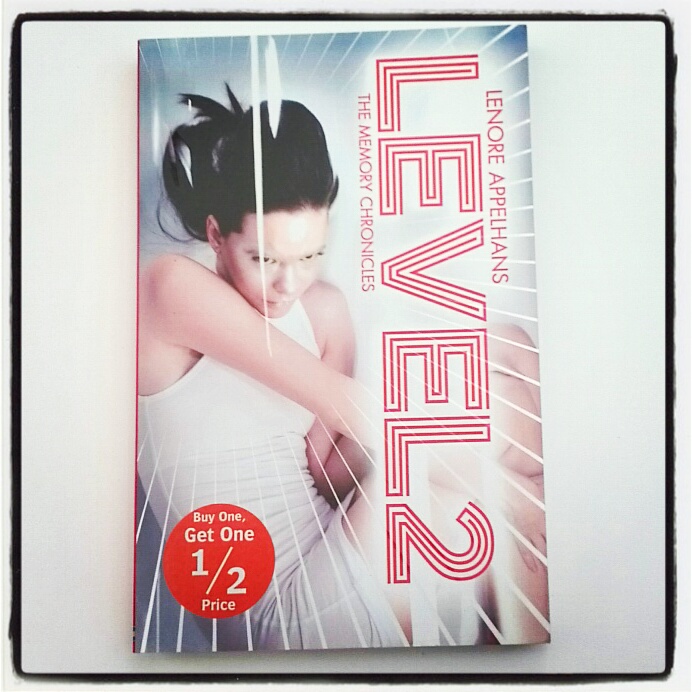
Level 2

Felicia Ward is dead.  Trapped in Level 2, the waiting room between earth and heaven, she spends endless days replaying memories, of her family, friends, boyfriend...and of the guy who broke her heart.  The guy who has just broken into Level 2 to find her.

Felicia learns that a rebellion is brewing in Level 2, and it seems she is the key.  Suspended between heaven and earth, she must make a choice.  Between two worlds, two lives and two loves.

I picked up Level 2 because the blurb sounded interesting, while skipping over the part where it mentions a love triangle.  All I can say is, what an idiot!  I took Level 2 with me on holiday, managing to read it in a day.  I was left with the notion that Lenore Appelhans debut novel wasn't terrible, yet I'm not inclined to recommend it to any one either. 

For starters, there were so many typical YA tropes. In such a short book, that's a real achievement.  However, my main problem was with the sections that took place in Level 2; a sort of purgatory where the dead can hook into pods to relive memories they accumulated from their time on Earth.  For me, Felica's memories were far more interesting, and better than the convoluted mess of her after-life.  Remember, this is coming from someone who's not a fan of contemporary YA.

After reading this, Mila 2.0 and the Darkness Rising Trilogy pretty much back to back, it got me wondering what happened to all the decent female friendships in YA novels?  Why are these girls all backstabbers?  Especially over BOYS?!?  Can't they be backstabbers for more imaginative reasons?  Like you stole my favourite pen?  Pretty please?  If anything, these types of books make me thankful and appreciative for the characters the inhabit Gail Carriger's books.  If Dimity ever dumps Sophorina, or vice verse, over a boy, I don't know what I'll do, but it will probably include Hulk like smashing.

I don't want to sound harsh, and I'm sure if you like any of these: love triangles, girls who are so beautiful that boys fall at their feet without the girl realising her Helen of Troy like beauty, a bitchy best friend, and some angels thrown in for good measure, then Level 2 will be the book for you.  It's just not a book for me.

Friday, 17 May 2013

Ink

Ink is in their blood
On the heels of a family tragedy, Katie Greene must move halfway across the world. Stuck with her aunt in Shizuoka, Japan, Katie feels lost. Alone. She doesn’t know the language, she can barely hold a pair of chopsticks, and she can’t seem to get the hang of taking her shoes off whenever she enters a building.

When Katie meets aloof but gorgeous Tomohiro, the star of the school’s kendo team, she is intrigued by him... and a little scared. His tough attitude seems meant to keep her at a distance, and when they’re near each other, strange things happen. Pens explode. Ink drips from nowhere. And unless Katie is seeing things, drawings
come to life.

Somehow Tomo is connected to the kami, powerful ancient beings who once ruled Japan—and as feelings develop between Katie and Tomo, things begin to spiral out of control. The wrong people are starting to ask questions, and if they discover the truth, no one will be safe.

While I enjoyed reading Amanda Sun's first instalment of The Paper Gods series, I can't figure out if I actually liked the story of how Katie Green becomes involved with a boy whose drawings come to life, or if I was just mesmerised by the Japanese setting.  There's plenty of unique elements, but now that I've had some time to think, the relationship aspect of Ink was cliché and could be found in multiple YA books available already.  Girl meets dangerous boy, dislikes boy, slowly starts to fall for boy, boy pushes her away, girl decides he's worth fighting for, hijinks ensue.

However, aren't there only 6 stories in the world?  It's how you shape them that matters and boy, does Sun have a way of gift wrapping a story with a forbidden relationship at the core.  Ink was extremely readable, and I couldn't wait to find out more about Katie's connection to the Kami. Not to mention that Sun's peppering of small details to give a sense of place is astounding, and I loved that I was learning about Japanese culture without even realising it.  Another one of the saving graces of Ink is that Katie isn't as whiney as some of the YA characters I have recently come across (Mila, I'm looking at you!).  If she kept up with her kendo lessons, I suspect she'd become pretty bad assed.

So, even though I was indeed mesmerised by the exotic setting, I'm excited to see where Sun will take her characters next, as the end of Ink opens up a world of possibilities, and how she will develop the mythology surrounding the Kami.  If you get a chance to, then pick a copy of Ink up, if only to stare at the beautiful artwork on the cover!
 
Ink will be published on the 5th July 2013.
Many thanks to Harlequin UK for approving my request to receive an EARC from Netgalley. 

Thursday, 2 May 2013

Scarlet

Scarlet Benoit's grandmother is missing.  The police have closed her case.  The only person Scarlet can turn to is Wolf, a street fighter she does not trust, but they are drawn to each other.

Meanwhile, in New Beijing, Cinder will become the Commonwealth's most wanted fugitive - when she breaks out of prison to stay one step ahead of vicious Queen Levanna.

As Scarlet and Wolf expose one mystery, they encounter Cinder and a new one unravels.  Together they must challenge the evil queen, who will stop at nothing to make Prince Kai her husband, her king, her prisoner...

Scarlet is the second book in Marissa Meyer's the Lunar Chronicles.  Instead of just following the titular character from Cinder, Meyer introduces new characters and expands her futuristic world beyond the confines of New Beijing. 

I couldn't put this book down, but it becomes clear very quickly that Scarlet could have been a narrative disaster, as there's three different plots going on simultaneously.  Instead, Meyer adeptly tells her story through Cinder, Scarlet and Kai's point of view, with no strand of plot or exposition feeling sluggish or out of place.
 
Most of my admiration for the Lunar Chronicles comes not only from the strong female characters, but from Meyer keeping well away from America.  I'm tired of every dystopian novel being set in an almost unrecognisable U.S, so it's fantastic to read Meyer's interpretation of a futuristic Beijing and now rural France/Paris.

Another plus point for me was that only a few key details of the Red Riding Hood tale are harvested and interpreted into the story.  When I was reading Cinder I felt that Meyer had tried to force too many elements from Cinderella into her writing when they were not needed.  For example, I kept asking myself why Cinder would refer to Adri as her step-mother when she wasn't a blood relation of Linh Garan and she was adopted by Garan when he was married to Adri?  The only negative I question I had this time around was why did everyone have to wrinkle their noses at some point in the story?  Have they all got hay-fever? Any other explanations?

Now is the point where I'm going to come off as one of those crazy fan girls, and I do keep on wishing my time away, but I need to read Cress...like, yesterday!  Instead, I'll have to wait patiently until 2014 rolls around before I can find out where Cinder and company are off to next.  I knew there was a reason why I don't tend to start a book series straight away: it's because I have ZERO patience when waiting for the next instalment to be published.  Why did you have to make this series so darn readable Marissa Meyer, huh?

Wednesday, 24 April 2013

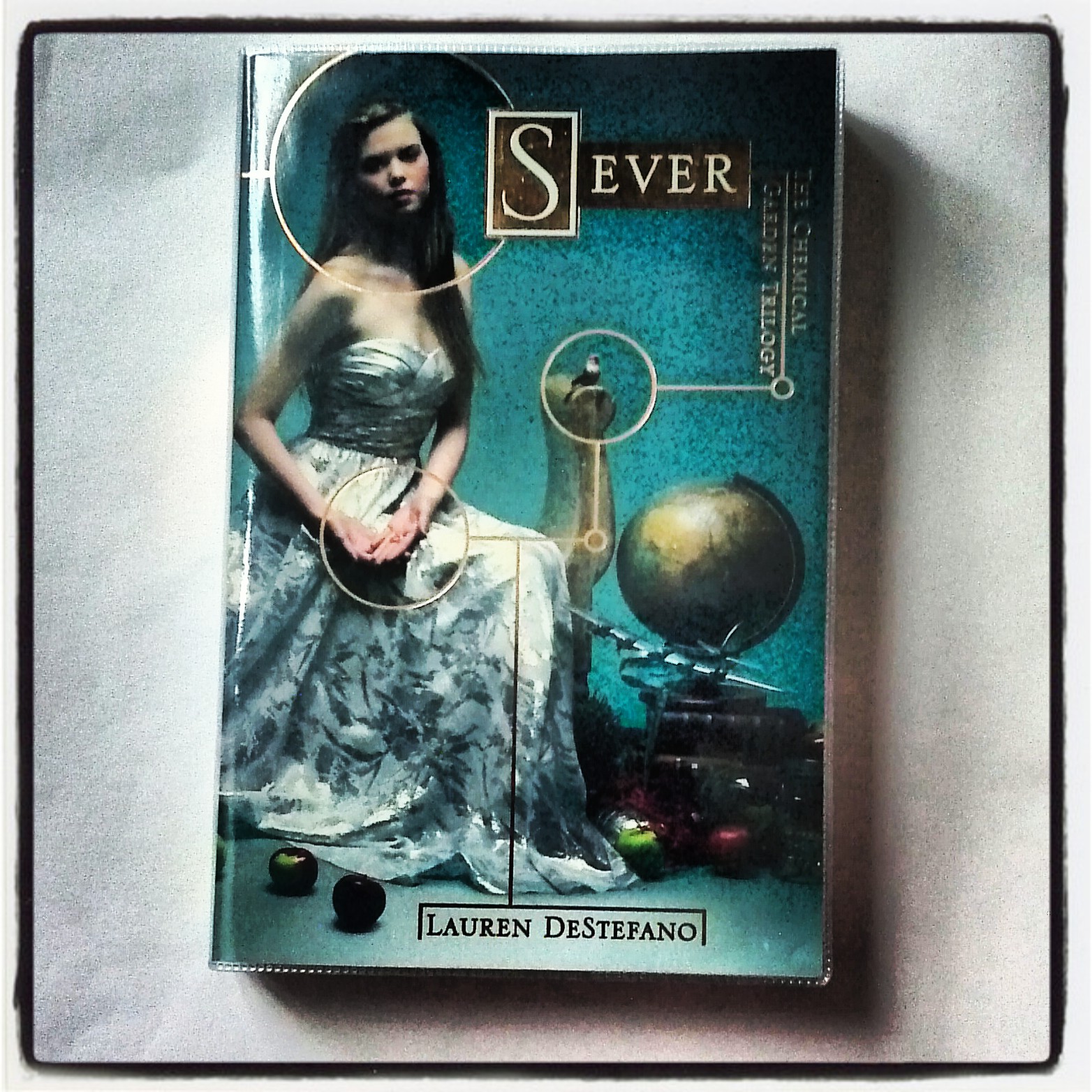
Sever

Time is running out for Rhine.

With less than three years left until the virus claims her life, Rhine is desperate for answers.  Having escaped torment at Vaughn's mansion, she finds respite in the dilapidated home of her husband's uncle, an eccentric inventor who hates Vaughn almost as much as Rhine does.

Rhine determination to be reunited with her twin brother, Rowan, increases as each day brings terrifying revelations to light about his involvement in an underground resistance.  She realizes she must find  him before he destroys the one thing they have left: hope.

Sever is the last book in The Chemical Garden trilogy by Lauren DeStefano.  I read the conclusion of Rhine's tale in a day and, like the other two books that proceeded Sever, I was pleasantly surprised with the events that unfolded.

I enjoyed reading Sever and couldn't put it down.  Linden and Cecily feature more prominently, helping Rhine to finally find her twin brother, and the introduction of Vaughn's brother Reed and his house of assorted junk was great. DeStefano's tale has a good momentum, and a somewhat satisfying ending, yet this final book is not flawless. 

Rhine suddenly becomes unwilling to speak her mind, losing some of her back bone towards the end of the story.  She is constantly listing all the reasons why she should tell the truth and then changes her mind, remaining silent and pliable to those who want to use her.  Although, at least she had a spine to begin with, unlike the majority of YA heroines I have come across so far.  Instead much of the character growth is borne out of Rhine's sister wife, Cecily, who becomes less of the annoying red-headed child and proves that she can be a loving mother, devoted wife and a good friend.

For me, the major problem lies in that an important moment in Sever is completely underwritten. For an author who is normally more than adept at conjuring a detailed atmosphere from their words, DeStefano's description for this certain event was unusually vague.  I had to read the passage three times to try and understand what had just occurred.  While I don't expect to be spoon fed with exact and intricate detailing when reading, just a small sentence to explain how would have been much appreciated.

I wasn't expecting to fall in love with The Chemical Garden Trilogy, and I didn't.  However, instead, I found three books that were extremely easy to read and somewhat interesting.  Sometimes that's all I can ask for.

Wednesday, 17 April 2013

Prodigy

Missing
June Iparis
Agent, Los Angeles City Patrol,
15, Female, 5 FT 4 IN. 
350,000 Republic notes reward.
 
If seen, report immediately to your local official.
 
That's what the republic wants their people to think.  That I'm missing.  What they don't say is they want me dead.  I helped Day, the country's most notorious criminal, escape his execution, aided the rebel patriots in a staged uprising and turned my back on the republic.
 
But I won't turn my back on Day...

I'll be the first to admit that I wasn't as obsessed with Marie Lu's first dystopian novel Legend as other bloggers seemed to be.  While I thought there was plenty of good stuff in there, I was totally anti a June and Day romance.  Why couldn't they just admire each others abilities and similarities and then build up to the smoocholas in either the second or third book in the trilogy? 

However, the coupling that I hated in the first book become a strength in Prodigy.  Lu provided of a sense of who these characters are, and consistently showed me why I should be rooting for a Day/June relationship.  Prodigy has so much to love (including the fact that Lu isn't afraid to kill off her characters, as I like it when peril actually means peril) and I couldn't put the book down; a complete contrast to my experience of when I was reading Legend. 

With Prodigy, Lu successfully expanded her damaged world, that has been ravaged by the effects of global warming, beyond the Republic.  I don't want to be too spoilery, but the contrast between the Republic and the Colonies is rather interesting. I hope that the dichotomy between the two is explored further in the next book. 

My one criticism is that I guessed some of the plot twists early on.  This explains why, when Day and June finally figured that there were shenanigans taking place, I was all Dennis Duffy from 30 Rock, actually shouting, "FINALLY DUMMIES!" 

So how does the Legend series progress?  And how does Lu even begin to wrap up her trilogy in a satisfying way?  We'll have to wait until next year when Champion is released.  Is it wrong that I am hoping for a they all die at the end scenario?

Friday, 12 April 2013

Code Name Verity

 
I have two weeks.  You'll shoot me at the end no matter what I do.

That's what you do to enemy agents.  It's what we do to enemy agents.  But I look at all the dark and twisted roads ahead and cooperation is the easy way out.  Possibly the only way out for a girl caught red-handed doing dirty work like mine - and I will do anything, anything, to avoid SS-Hauptsturmfuhrer von Linden interrogating me again.

He has said that I can have as much paper as I need.  All I have to do is cough up everything I can remember about the British War Effort.  And I'm going to.  But the story of how I came to be here starts with my friend Maddie.  She is the pilot who flew me into France - an Allied Invasion of Two.

We are a sensational team.

I am always on the look out for different types of YA fiction.  Having seen Elizabeth Wein's WWII set Code Name Verity being reviewed positively on quite a few other blogs, I decided to get a copy out from the library.

Code Name Verity is interesting without being too teachy, even if now, after reading, I can't remember all the details about the various planes used in WWII.  However, it's hard to talk about this book in depth without giving away major plot developments.  So, as usual, I will try to be as vague as possible. 

All of the twists and turns that are expected from a novel about war time espionage are there, feeding my love of an unreliable narrator.  The epistolary style can take some getting used to, especially when it doesn't seem like some of the narrative should be included in the girl's accounts.  The latter half of the novel changes to a first person narrative with a few letters added in, providing a secondary look on what has already been divulged.

Yet, more than this, Code Name Verity is about the strength of friendship.  There's no big romance to be found here, only the 'Allied Invasion of Two'.  The relationship between the two leads is portrayed excellently.  I was continually shown why these two girls were best friends and I believed in them.  I also liked that Wein  gave her 'villain' Hauptsturmfuhrer a family, emphasising that normal people did horrible things in the war because they had to.

The ending is heart-breaking, but then Wein's tale could not have ended in any other way.  Also, if you normally skip the author's acknowledgements at the end, then make an exception for those as the end of Code Name Verity.  I found them to be extremely informative, and answered a few of my questions.   For example, why are some of the locations in her tale non-existent/misnamed?

I thought this was a great book.  No romance, kick-ass heroines and a cover that ties into the novel: what more could I ask for?  Admittedly I did get a little unenthused about reading somewhere in the middle, but if you're fed up of YA dystopia's and fancy something a bit different, then why not give Code Name Verity a try?

Saturday, 6 April 2013

Pantomime

R.H Ragona's Circus of Magic is the greatest circus of Ellada.  Nestled among the glowing blue Penglass - remnants of a vanished civilisation - are wonders beyond the wildest imagination.  It's a place where anything seems possible...a place where anyone can hide.
  Iphigenia Laurus, or Gene, the daughter of a noble family, is uncomfortable in corsets and crinoline, and prefers climbing trees to debutante balls. Micah Grey, a runaway living on the streets, joins the circus as an aerialist's apprentice and soon becomes the act's rising star.  But Gene and Micah have balancing acts of their own to perform, and a secret in their blood that could unlock the mysteries of Ellada.

I was aware of certain elements of Pantomime before I had a chance to read the book due to some spoilery reviews on other sites around the net (my own fault...curiosity killed the cat and all that jazz).  I agree that the blurb does not really describe what happens in the book, but sometimes I do like to be bamboozled.  I just hope this was Strange Chemistry's intention, and not a case of trying to make the book more marketable.

I have wanted to read Laura Lam's debut novel, Pantomime, ever since I spotted it on the Strange Chemistry website late last year.  When I finally got a copy from the library, I suddenly became afraid that this YA novel would not live up to my expectations, especially after my experience of reading another circus set novel that I had high expectations for, Erin Morgenstern's The Night Circus.

When I read The Night Circus, I felt that Morgenstern was covering up her lacklustre characters with too many descriptions, forcing me to find her world magical.  This isn't the case with Pantomime. Instead of being bombarded with the spectacular, Lam proves that you can evoke the magic and otherness of a circus without detailing all the specifics.  Instead she has found a balance between the circus and her mysterious characters, most of whom have ulterior motives that are never quite revealed.

The alternating chapters/time lines of Spring and Summer took some getting used to.  However, once all is revealed, the transitions between the two become effortless.  Another interesting point is that Pantomime is set so far in the future; we're not talking hundreds of years but thousands, yet the world of Ellada has a strange alternative old timey Victorian vibe.  Lam's narrative pulls you along on a journey through this strange world, tugging at your curiosity on every page. 

What knocked me out of my Pantomime adoration was the ending - it was so abrupt.  I had been going along thinking, wow, a stand alone YA book!  And then wallop...this is part of a series.  It's not a bad thing, any further expanded information about the history of Ellada and of Micah's ancestry would be fantastic, but I just wish that Pantomime had been more conclusive.  Nonetheless, I am still buying myself a copy (I was tempted to never give back the library copy...but that would mean I couldn't get anymore books out) as Laura Lam crafted a completely refreshing and original tale that I would want to read again and again. 

Wednesday, 3 April 2013

A Million Suns

Trapped on board the spaceship Godspeed, Amy trusts no one.
 
The ship's ruler is dead and a rebellion threatens.  Amy wants to help Elder as he tries to take charge, but she's torn between her feelings for him and the chaos that's pulling everything apart.  As more harrowing discoveries are made about Godspeed, Amy is caught in a  desperate race to unravel its secrets.  Only one thing is certain.
 
They have to get off this ship.

It's no secret that I found Beth Revis' Across the Universe disappointing; not so much that I didn't want to read the next instalment of the series, but enough to have my doubts that I would continue with the trilogy beyond the second book.  Imagine my surprise when I read A Million Suns in one morning, unable to put the SCI FI YA tale down until I had finally found out all of the secrets that were still hidden within Godspeed.   

The plot of A Million Suns primarily concerns itself with Elder's struggle becoming a leader; not only is he too young for the job, but he is having to deal with a population that is no longer drugged into submission.  Throughout Revis is continually asking tough moral questions, not of her characters but of her readers too, the main one being should Elder resort to using Phydus again in order to gain some type of order and save the population of the ship?

The book is again split, alternating between Elder and Amy's narrative.  For me, I think my new found love of the series came about because I didn't mind reading the Amy sections this time around.  With the events of A Million Suns, Amy had something to focus on other than her parents and her constant whinging for the life she left behind.  Amy's narrative voice has evolved due to her adapting to life on Godspeed. While she hasn't forgotten her parents, her previous life isn't as all consuming as it once was. 

I thought that A Million Suns was a lot stronger than Across the Universe in many ways, and although the 'villain' of this book was really obvious, I still enjoyed going through the rabbit hole with Amy and Elder.  Unlike before, I am now very excited to see how Revis wraps up her trilogy and am going to order a copy from the library as soon as it becomes available.

Wednesday, 20 March 2013

Rebel Heart

 
It took me a few days to read Blood Red Road, and I thought that the same reading time would apply to it's sequel, Rebel Heart.  Not the case.  I read this thing in a day.  It was a couldn't put it down, didn't look at page numbers, totally in the Dustlands with everyone, situation.  Here's my warning that there may be spoilers ahead...but I'll try my best to be as vague as I possibly can.
 
There's a price on Saba's head.
They call her the Angel of Death. She defeated a tyrant, but victory has come at a cost. Haunted by the ghosts of her past, she needs Jack. His moonlit eyes, his reckless courage, his wild heart. But Jack has left, and a ruthless new enemy searches for Saba across the Dustlands...
 
While not as action laden as Blood Red Road, Moira Young's second Dustland book features plenty of character development.  Rebel Heart has a lot in common with Lauren DeStefano's Fever in the sense that just because you defeated/escaped the big bad of the first book doesn't mean that all of your problems will fade away and your happily ever after will appear out of nowhere.
 
For a start Lugh and Saba's once close relationship has completely fractured by the events of Blood Red Road.  It's frustrating because throughout the book there's no communication between any of the characters.  If only Lugh would tell Saba of his experiences of being held hostage by the Tonton.  If only Jack could tell Saba his plan.  But then if these secrets were divulged, Rebel Heart would be rather boring... 
 
Lugh's not the only one with problems.  Saba's own guilt has been manifesting over all the girls that died during her stint as a cage fighter and also over her part in Epona's death.  It's a tough choice to take your strong narrator and show her weaknesses, but it pays off by making Saba appear human.  The only grating part is when Saba tries to go off on her own again, only to be chased down by the rest of the gang.  You'd think that by now she'd realise that her friends and family aren't going to let her go that easily.
 
Then there's the developments between Saba and DeMalo.  I sort of knew that Young was going in this direction ever since DeMalo's first appearance in Blood Red Road, so it wasn't a big shock.  I'm not one for love triangles, but people do silly things when they feel that they've been betrayed.  At least Saba realises that she may have made a mistake, and the portrayal of that is at least an adult, and real, representation of what life sometimes throws at you.  Though I am interested as to who the heart stone was directed at in the last scene, and to have DeMalo's ambiguity of character cleared up.  Just what does he want?
 
Rebel Heart isn't as thrilling as Blood Red Road, but that's not to it's detriment.  If anything I have a clearer idea about who these characters really are.  I do wonder what direction Young will take the plot and her characters in for the third book.  It's a shame I've got to wait until January 2014 at least until I find out.  Bah.